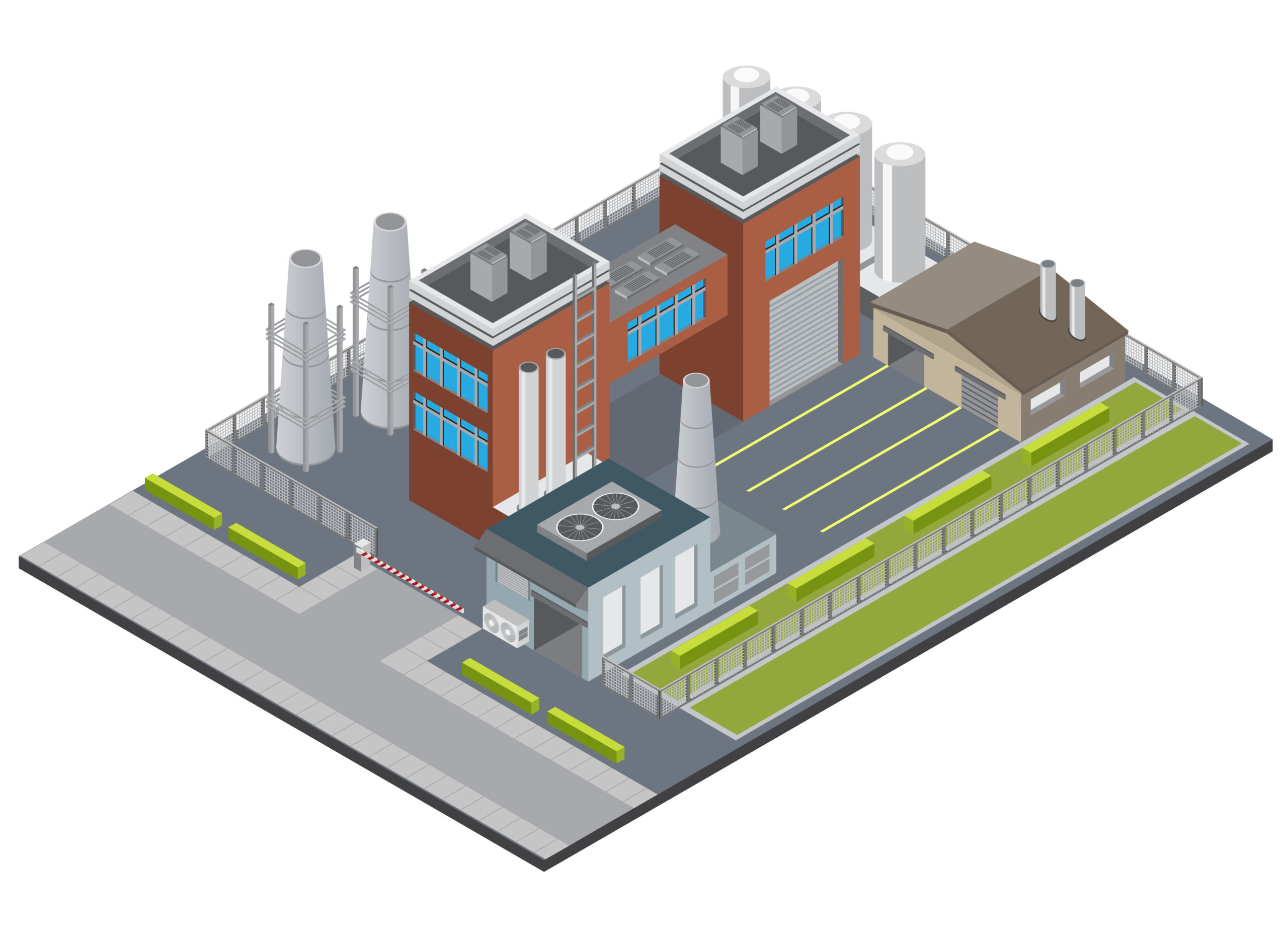
Click “buy now” at 11 p.m. and a package shows up Thursday. Feels like magic. It isn’t. It’s real estate. Behind every online order sits a very physical chain: inventory stored somewhere, picked by someone, packed, loaded, transported, delivered to a doorstep. Warehouses stopped being sleepy storage sheds a long time ago. They’re critical infrastructure for modern retail – the part of e-commerce you can touch.
And the trend underneath keeps running. U.S. e-commerce sales hit $326.7 billion in Q1 2026 – 16.9% of all retail sales, up 9.8% from Q1 2025. Nearly one dollar in six, spent online. That number is not a blip. One caveat before the math gets too exciting: not every bump in online sales produces an equal bump in warehouse demand. The relationship is real, but it isn’t one-to-one. More on that below.
How E-Commerce Creates Demand for Industrial Space
Every Online Sale Requires Physical Infrastructure
Follow one order through the system. A customer clicks. Inventory in a fulfillment center gets picked off a shelf, packed into a box. The box moves to a sorting facility, onto a truck, to a delivery hub near home, then the doorstep. Five physical steps, each happening in or through an industrial building.
Scale that by billions of orders and the logic gets simple. More order volume means more inventory to hold, more orders to process, more capacity needed. And not just anywhere – facilities must sit where the network actually flows. The internet may be weightless. The stuff it sells is not.
Faster Delivery Changes the Location Equation
Speed rewrote the map. When customers expect two-day, next-day, or same-day delivery, warehouse location becomes a competitive weapon. A facility closer to major population centers cuts transportation time and last-mile costs – and last-mile is the expensive part of the trip.
This is why the cheapest land isn’t always the best value. A bargain site ninety minutes from the customers burns the savings in fuel, time, and missed delivery windows. Proximity is a cost strategy disguised as a location choice. Cheap dirt, expensive deliveries. The math usually favors being close.
From Mega Warehouses to Last-Mile Logistics
Large Fulfillment and Distribution Centers
At the top of the chain sit the giants. Large regional fulfillment and distribution centers handle the scale work: receiving inventory by the truckload, processing huge order volumes, distributing products across entire regions. One big roof, enormous throughput.
These facilities are demanding tenants. They need substantial acreage, direct highway access, trailer parking and capacity, high clear heights, modern specs throughout. They anchor the network – but they aren’t the whole market. Confusing “industrial” with “big boxes” misses half the story. The giants connect to the small end – that’s the interesting part.
Infill and Last-Mile Warehouses
At the other end, small is strategic. Infill and last-mile warehouses sit close to dense consumer populations and handle the final stretch – the same-day and next-day orders that win or lose customer loyalty. A van leaving a city-edge hub at 8 a.m. can hit forty doorsteps before lunch.
The contrast explains the modern market: the mega warehouse wins on scale, the infill warehouse wins on proximity. Different jobs, different economics. That’s why well-located infill space stays competitive even when land costs run dramatically higher – the location itself is the product. Two formats, one supply chain – both succeed because they solve different problems.
Where Warehouse Demand Is Strongest
Population and Consumer Density
Where is demand strongest? Start with the obvious: people. Properties near large concentrations of consumers hold a built-in advantage, because every mile between inventory and customer costs time and money. Shorten it and the delivery equation improves.
Look past metro population totals – they lie a little. What matters is where households actually sit and which ones are growing. Two million people spread across suburbs need a different network than two million packed into a core. Growth maps and household distribution tell the real story; the headline number is just the cover.
Highways, Ports, Rail, and Intermodal Access
Consumers are only half the map. The other half is infrastructure: highway interchanges, ports, airports, rail lines, intermodal terminals. Goods don’t teleport from ship to doorstep – they move through a chain of nodes, each adding cost or removing it. A warehouse near a highway junction or intermodal terminal shaves days and dollars off every shipment.
Evaluate location from the whole supply chain’s perspective, not just the final mile. A site perfect for reaching customers but awkward for receiving inventory just moves the bottleneck upstream. The best locations serve both ends. Proximity to people matters. Proximity to everything else matters too.
Labor Availability Matters Too
One factor that surprises first-time industrial investors: people. Modern warehouses run on workers who operate automated systems, manage inventory, pick orders, and keep operations moving around the clock. Robots get the press. Humans do the work.
So a building with perfect highway access can still fail if the surrounding labor market is thin. No workers, no shifts. No shifts, no throughput. Before falling for a location’s transportation stats, check who actually lives within commuting distance – and whether they’ll work there.
The New Warehouse: Why Building Specifications Matter
Clear Heights, Loading Docks, and Trailer Parking
Not all warehouses are created equal, and the differences are measured in feet. Modern logistics users want higher clear heights – more vertical storage in the same footprint – plus efficient loading dock configurations, enough trailer parking, wider truck courts, and layouts built for high-volume distribution.
These aren’t cosmetic preferences. They decide who can rent the building. A warehouse with 24-foot ceilings and cramped courts quietly excludes most modern tenants, and every excluded tenant shrinks the future buyer pool too. That’s how buildings go obsolete: not by falling down, but by failing a checklist. Slowly, then all at once. Specs are destiny.
Automation and Technology Readiness
The second spec war is invisible. Automation keeps raising the bar on what a building must support: advanced material-handling systems, robotics, serious connectivity, electrical capacity that would shock an older property. Literally – some retrofits need entirely new power service.
Not every tenant needs robots, and pretending otherwise leads to overbuilding. The smart play is adaptability: enough power, floor flatness, and structural capacity to say yes when a tenant’s requirements arrive. A building that can be upgraded stays in the game. One that can’t becomes a storage shed with a truck court.
2026 Market Reality: Strong Demand Meets More Supply
Why Rising Vacancy Does Not Automatically Mean Falling Demand
Here’s the number that scares people who only read headlines. CoStar forecasts U.S. industrial vacancy rising from 7.5% to 7.8% by the end of 2026. Sounds ominous. It isn’t – because vacancy can rise for two different reasons, and only one of them is bad.
Reason one: tenants leave. That’s deteriorating demand. Reason two: new buildings deliver faster than tenants can absorb them. That’s supply, and it’s what’s happening now. The market is normalizing after years of unusually strong demand and rapid development – and demand is still expected to increase modestly through it. Rising vacancy with growing demand isn’t a contradiction. It’s a construction cycle doing what construction cycles do.
Absorption Provides a Better Demand Signal
If vacancy is a blurry photo, absorption is the video. Net absorption measures how much occupied space actually grew – move-ins minus move-outs. Simple arithmetic, powerful signal. It answers the only demand question that matters: are occupiers taking more space or less?
Right now the answer is more. CREDA’s Q1 2026 forecast projects 345.9 million square feet of U.S. industrial net absorption for the full year. That’s real expansion, not musical chairs. Read vacancy and absorption together, alongside construction, rents, and leasing activity. Watch the trend, not just the level. One number is a mood. The set of them is the market.
Beyond Amazon: The Broader E-Commerce and Logistics Tenant Base
Third-Party Logistics and Retailers
Quick quiz: who rents all this warehouse space? If the answer starts and ends with Amazon, the picture is out of date. Third-party logistics providers, traditional retailers building online fulfillment, direct-to-consumer brands, grocery operators, specialized distributors – the tenant list is long and getting longer.
That diversity matters for investors. A market dependent on one company’s network decisions is a market one announcement away from trouble. A market with fifteen different tenant types has shock absorbers. When evaluating demand, count the logos. More logos, more resilience. It’s that simple.
Cross-Border and International E-Commerce
Another source of tenants: overseas. International e-commerce operators entering the U.S. don’t sell from across an ocean – they build domestic fulfillment networks, and those networks need warehouses. Each new entrant is a fresh requirement for space.
The real estate implication is geographic. These operators gravitate toward markets near major ports and large consumer populations, because that’s where import economics and delivery economics overlap. A warehouse market with a port on one side and ten million consumers on the other sits in the path of that demand. Geography, once again, collects rent.
What E-Commerce Means for CRE Investors
Location Can Protect Long-Term Demand
For investors, the core question isn’t whether e-commerce grows – it’s whether a specific warehouse stays useful as logistics networks evolve. Buildings come and go. Locations endure. A property near major population centers and constrained transportation corridors holds relevance that’s hard to disrupt.
The key word is constrained. If the land around a warehouse is built out, zoned tight, or geographically limited, a competitor can’t simply replicate the location. Scarcity is a moat. The warehouse competing on cheap land has the opposite problem: anyone can copy cheap. Buy the location that can’t be rebuilt. Let someone else own the commodity.
Tenant Quality and Lease Structure Still Matter
A hot sector forgives nothing at the lease level. Strong sector demand doesn’t turn a weak covenant into a strong one. The basics still apply: tenant credit, lease duration, rent escalations, renewal probability, operating expenses, and whether another tenant takes the space if this one leaves.
That test is underrated. Ask who else could use the building, at what rent, and how fast. A great lease on a one-trick building is a single point of failure in a suit. Sector strength is the tide. Tenant quality is the boat. Both have to float.
How to Evaluate an E-Commerce-Driven Industrial Opportunity
A Practical Warehouse Investment Checklist
Everything above compresses into eight questions. Run them on any industrial deal, in any market:
- Consumer access – how close is the property to major population centers?
- Transportation – how efficiently can goods move to and from the facility?
- Building functionality – does it meet modern logistics specifications?
- Labor – is there an available workforce nearby?
- Supply pipeline – how much competing space is under construction?
- Tenant demand – which industries are actually leasing in this market?
- Lease economics – are the rents, escalations, and duration justified by fundamentals?
- Obsolescence risk – could the building become unsuitable for modern logistics users?
None of these require a crystal ball – just honest answers and local data. The checklist won’t pick winners by itself, but it reliably kills bad deals before they kill returns. Run it on every property, in the same order, every time. Consistency is the edge. The investors who skip steps usually meet them later, in the form of surprises.
Conclusion: The Warehouse Is the Physical Infrastructure of Digital Retail
Strip away the headlines and the thesis holds: e-commerce remains a structural driver of industrial real estate, because digital retail still runs on physical inventory, warehouses, transportation networks, and delivery infrastructure. Online sales keep growing faster than total retail, even as the industrial market works through supply normalization.
But the winning strategy was never “buy an e-commerce warehouse.” It’s finding properties with durable logistics advantages, modern functionality, strong tenant demand, and locations that are difficult to replicate. E-commerce creates the demand. Location, functionality, supply constraints, and tenant economics decide where that demand becomes durable value. The packages will keep coming. Own the ground they pass through.